
Is Your Child’s Nursery Staff First Aid Trained?
You've checked the Ofsted rating. You've visited the nursery. You've asked about the routine and the key workers. But did you ask what happens if your child chokes?
It's a question few parents think to ask, and it isn't an easy one to answer yourself. A British Red Cross survey in 2017 found that three out of four UK parents would not be able to save their baby from choking. So it matters a great deal whether the people looking after your child while you're at work have been trained for exactly that.
Paediatric first aid is the training that prepares nursery staff for emergencies involving babies and young children. Every nursery should take it seriously, and every parent should ask about it. This guide explains what it is, what the law requires, which questions to ask when you visit a nursery, and how we approach it at Abbey Wood Grange.
What Is Paediatric First Aid?
Paediatric first aid means knowing what to do in an emergency involving a baby or young child, in the minutes before an ambulance arrives. It's specialist training designed specifically for babies and young children, and it gives practitioners the knowledge and practical skills to respond to a wide range of medical situations, including:
- Choking
- Burns and scalds
- Cuts and bleeding
- Allergic reactions
- Asthma attacks
- Seizures
- Head injuries
- Fractures and sprains
- CPR for infants and children
- Responding to unconsciousness and emergency situations
It's different from adult first aid because babies and children need different techniques. CPR on a baby is done differently from CPR on an adult, and a choking baby needs a different response from a choking adult. Young children can also have febrile seizures, which are fits that can happen when a child has a high temperature. The NHS says they usually affect children between 6 months and 6 years old, which covers most of the age range in a nursery.
Regular refresher training keeps these skills current and in line with the latest best practice.
Why Is First Aid Training So Important For Nursery Staff?
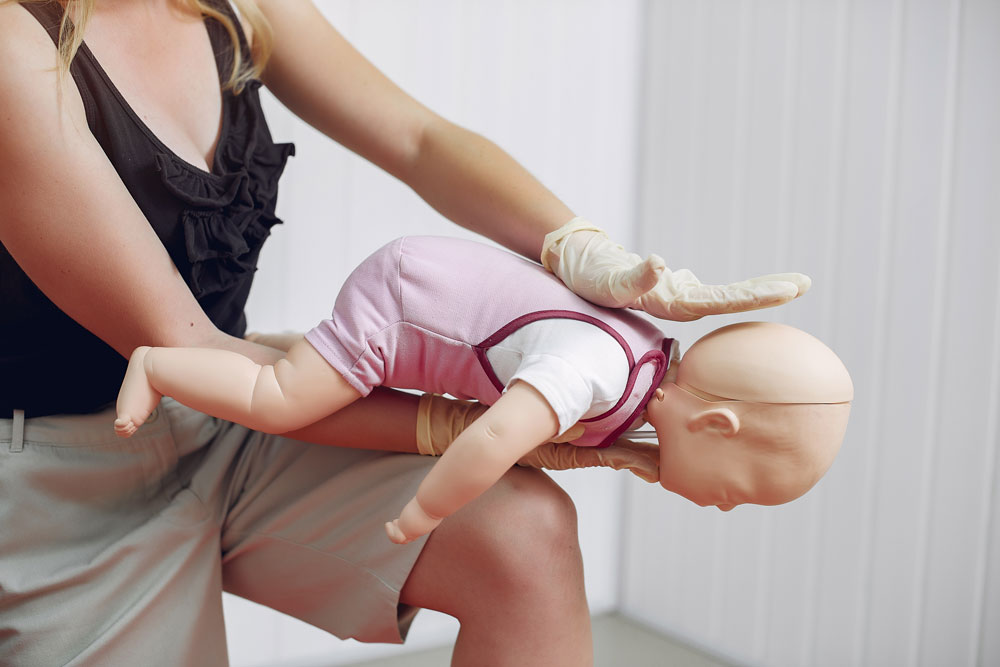
Children are naturally curious. Whether they're learning to crawl, climbing, exploring outdoors or enjoying messy play, every day brings something new to try. Even in the safest nursery, bumps, scrapes and unexpected incidents can happen, from a fall to a choking episode or a sudden illness. First aid training matters for these reasons:
- Choking is a real risk: Babies are curious and explore by putting things in their mouths, especially when they're teething. The British Red Cross has highlighted small everyday items such as sweets, grapes and coins among the common choking hazards for babies and young children, and in a nursery those risks come up at mealtimes and during play.
- Every second counts: In an emergency, a prompt, calm and knowledgeable response can make a significant difference while waiting for emergency services, if they're needed.
- Trained practitioners stay calm: They know what to do and follow established procedures, even under pressure.
- Someone is always nearby: When every member of a nursery team is trained, there's always someone who can act immediately, wherever a child is in the building.
- It shows a nursery's priorities: A nursery that invests in first aid training takes its duty of care seriously.
What Does the Law Require?
In England, the Early Years Foundation Stage (EYFS) statutory framework sets the minimum:
- At least one person with a current paediatric first aid certificate must be on the premises whenever children are present, and must go with children on outings.
- Since September 2025, there should also always be a member of staff with a valid certificate in the room while children are eating.
- Paediatric first aid training must be renewed every three years.
- Nurseries should display staff certificates, or make a list of staff with a current certificate available to parents.
That's the minimum: at least one trained person on site, with no requirement for the whole team to be trained. Nurseries can go further, for example by training more of their staff or refreshing skills more often than every three years, so it's worth asking what each nursery actually does.
Questions Every Parent Should Ask Their Nursery
Choosing a nursery is one of the biggest decisions a parent makes, and any good nursery will be glad you asked about first aid. Here are five questions to take with you when you visit, and what a good answer looks like.
- Is every member of staff first aid trained, or just some? The legal minimum is one trained person on site. A nursery that trains its whole team means there is always someone nearby, whichever room your child is in.
- Is the training specifically for babies and young children? Standard first aid courses don't cover the techniques used for babies and children. Look for "paediatric" first aid.
- When was the training last done? Certificates have to be renewed every three years, so ask when the current ones were issued.
- Can I see who holds a current certificate? Nurseries should display certificates or share a list of staff who hold one, so this is a fair request.
- Is a trained person always in the room at mealtimes? Choking can happen while children are eating, which is why the EYFS now asks for a trained person in the room at those times.
We're happy to answer all of them. Book a visit or call us on 0208 660 9040.
What Abbey Wood Grange Does Differently
We've been caring for children in Kenley since 1990, and first aid is one of the things we've made a priority.
- Every practitioner is trained: All of our practitioners hold a paediatric first aid qualification, not just the one person the law requires, so a child gets immediate, appropriate care from whichever practitioner is closest.
- The training is for babies and young children: It's paediatric first aid, which covers the techniques babies and young children need, including infant CPR and how to respond to choking.
- We refresh our training: Our practitioners take regular refresher training so their skills stay current.
- We're independent: Abbey Wood Grange is a privately owned nursery, not part of a chain. Decisions like this come from our own team, not from a head office.
- There's always someone close by: Our baby unit cares for babies from 3 to 16 months, with one adult to every three babies, and every practitioner is trained to respond.
From comforting a child after a minor bump to responding in an emergency, our practitioners are trained to help.
First aid training prepares us for the unexpected, and our everyday routines help stop incidents happening in the first place. Our practitioners carry out daily risk assessments of our indoor and outdoor spaces, follow our health and safety and safeguarding policies, support children's emotional wellbeing, and keep parents informed.
We also help children learn about safety in age-appropriate ways. Through everyday conversations and activities, they begin to understand how to take turns safely, use equipment correctly, wash their hands properly, spot simple hazards and look after themselves and others.
Want to see how it works in practice? Visit our baby unit page or book a visit to meet the team.
Come and See Us for Yourself
Asking questions like these is exactly the right thing to do when you're choosing a nursery. Come and visit Abbey Wood Grange, meet our practitioners and see for yourself how we care for your child. We want you to feel reassured from the moment you walk through our doors, and we welcome visits by appointment.
or call us on 0208 660 9040
Frequently Asked Questions
-
Are nursery staff trained in first aid?
In England, a nursery must have at least one person with a current paediatric first aid certificate on the premises whenever children are present. Some nurseries train more of their team, so it's worth asking how many of the staff caring for your child hold a current certificate.
-
Are all the practitioners at Abbey Wood Grange paediatric first aid trained?
Yes. All of our practitioners hold a paediatric first aid qualification, not just the one person the law requires, so there's always a trained practitioner nearby, whichever room your child is in.
-
Is paediatric first aid different from standard first aid?
Yes. Babies and young children need different techniques, including for CPR and choking, so paediatric first aid is taught as a specialist course.
-
Is there a first aid trained practitioner with the babies at Abbey Wood Grange?
Yes. Our baby unit cares for babies from 3 to 16 months, with one adult to every three babies, and every practitioner is trained in paediatric first aid, which includes CPR for infants.
-
How often does paediatric first aid training need to be renewed?
Every three years, under the EYFS statutory framework.
-
What first aid training do your practitioners have, and how often do they renew it?
Our practitioners are trained in paediatric first aid, which is designed specifically for babies and young children, and they take regular refresher training so their skills stay current.
-
Can I ask a nursery to show me its first aid certificates?
Yes. The EYFS says nurseries should display staff paediatric first aid certificates, or make a list of staff with a current certificate available to parents.
-
Can I visit Abbey Wood Grange and ask about first aid?
Yes. We welcome visits by appointment, and we're happy to answer any questions about first aid and how we keep children safe. Book a visit to meet our practitioners.
Latest Articles
-
 Is Your Child’s Nursery Staff First Aid Trained?
-
Fun Family Events Near South Croydon This Summer
-
What Age Do Children Start Nursery?
-
Preparing Your Child for Primary School in Kenley, South Croydon
-
Common Nursery Interview Questions & How To Answer Them
-
Applying for Nursery: When, How, and How to Improve Your Chances
